Chinese Grand Prix Track Guide 2026

Updated March 9, 2026


Updated March 9, 2026
The Chinese Grand Prix takes place at the Shanghai International Circuit, a modern permanent racing facility located on the outskirts of Shanghai. Designed by Hermann Tilke and opened in 2004, the circuit is known for its distinctive layout and wide racing surface that encourages overtaking.
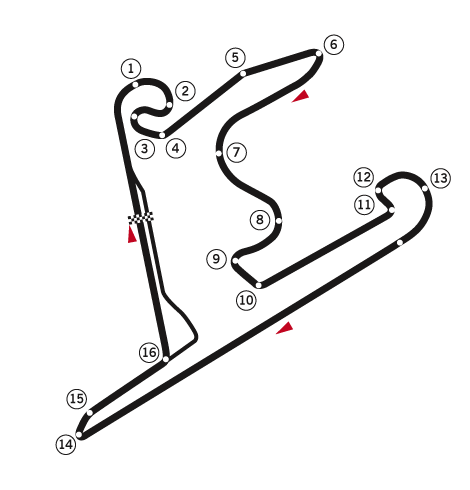
The track is designed to resemble the Chinese character “上”, meaning “up” or “above”. Long sweeping corners dominate the opening sector before the circuit transitions into tighter technical sections and one of the longest straights on the Formula 1 calendar.
Since joining the Formula 1 schedule in 2004, Shanghai has produced several memorable races and has often rewarded drivers who manage tire wear and braking stability through the circuit’s demanding corners.

| Circuit | Shanghai International Circuit |
|---|---|
| Location | Shanghai, China |
| Circuit Type | Permanent racing circuit |
| Lap Length | 5.451 km |
| Corners | 16 |
| Race Distance | 56 laps |
| Race Lap Record | 1:32.238 – Michael Schumacher |
The circuit features one of the longest straights in Formula 1, stretching more than one kilometer between the back straight and the Turn 14 hairpin. This section creates one of the best overtaking opportunities on the calendar.
Formula 1 enters a new technical era in 2026 with redesigned cars and updated power unit regulations. The new rules place greater emphasis on electrical energy deployment, which means drivers must manage battery output carefully during overtaking attempts on Shanghai’s long straights.
The cars are also slightly smaller and run on narrower tires, which can influence tire degradation during longer stints. At a circuit with several long corners and heavy braking zones like Shanghai, teams must balance energy deployment with tire management to maintain pace across the race distance.
Shanghai International Circuit is known for its unusual corner sequences and wide layout. The opening turns form a long tightening spiral that places heavy stress on the front tires, while the middle sector features several medium speed corners that reward balanced aerodynamic setups.
Key characteristics include:
The long straights reward efficient aerodynamics and strong acceleration, while the slower corners require stable braking and traction. Teams often adjust setups to balance straight line speed with tire protection through the extended corner sequences.
Tire wear can become a significant factor during the race because several corners load the front tires for extended periods. Managing degradation across a race stint can therefore influence pit strategy and race pace.
The 2026 technical regulations introduce lighter cars and a greater reliance on electrical energy deployment. Drivers must carefully balance battery deployment with tire preservation, particularly through the long opening corners that place sustained pressure on the front tires. Conserving energy for the long back straight can provide a decisive advantage when attempting to pass into the heavy braking zone at Turn 14.
Shanghai has historically produced races where pit strategy and tire management influence the final outcome. Weather can also significantly shuffle the order here. With multiple overtaking zones available, teams often remain flexible with pit timing depending on safety cars, tire wear, and track position.
Factor | Impact on Race Strategy |
|---|---|
Energy Deployment | Managing battery output is important for overtaking along the long back straight |
Tire Degradation | Front tires experience sustained wear through the long opening corners |
Overtaking Zones | The Turn 14 hairpin provides one of the best passing opportunities on the calendar for those who have conserved enough energy |
Qualifying Position | Starting near the front remains valuable but overtaking is more achievable than at tighter circuits |
Because Shanghai features several heavy braking zones and long straights, race strategy often remains flexible. Teams may adjust pit windows depending on tire wear and track position, particularly if safety cars influence the race.


