Australian Grand Prix Track Guide

Updated March 9, 2026


Updated March 9, 2026
The Australian Grand Prix takes place at the Albert Park Circuit in Melbourne, a fast and technical semi-street track that traditionally hosts the opening round of the Formula 1 season. The layout runs around Albert Park Lake using public roads that are temporarily converted into a racing circuit each year.
Albert Park combines long straights with medium-speed corners, which forces teams to find a compromise between straight-line speed and aerodynamic stability. Because the roads are used for everyday traffic during most of the year, the surface begins the weekend with relatively low grip before improving as more rubber is laid down during practice sessions.
Melbourne has hosted the Australian Grand Prix since 1996 after the race moved from Adelaide. The event is one of the most popular stops on the Formula 1 calendar and regularly draws large crowds to the lakeside circuit.
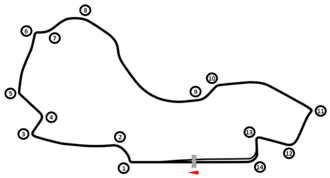
| Circuit | Albert Park Circuit |
|---|---|
| Location | Melbourne, Australia |
| Circuit Type | Semi-street circuit |
| Lap Length | 5.278 km |
| Corners | 14 |
| Race Distance | 58 laps |
| Race Lap Record | 1:19.813 – Charles Leclerc |
The track was revised in 2022 to improve overtaking opportunities and increase overall speed. Several corners were widened or reshaped, and a chicane section was removed to create a faster middle sector.
Formula 1 enters a new technical era in 2026 with redesigned cars and updated power unit regulations. The new rules place greater emphasis on electrical energy deployment, meaning drivers must manage battery output carefully when attacking or defending position.
The cars are also slightly smaller and run on narrower tires, which changes how grip and tire wear develop over a race stint. At a circuit like Albert Park, these factors could increase the importance of energy management and tire strategy alongside track position advantage.
Albert Park sits somewhere between a street circuit and a traditional permanent track. While the barriers and surface resemble a street layout, the circuit includes several high-speed sections that reward efficient aerodynamics.
Key characteristics include:
Teams often run relatively low-downforce setups compared with other street circuits because of the long flat-out sections. Drivers spend a large portion of the lap at full throttle, making engine performance and aerodynamic efficiency important factors.
Grip levels also change noticeably during the weekend. Early practice sessions can feel slippery, but the surface improves significantly by qualifying once the racing line becomes rubbered in.
The 2026 season introduces one of the most significant technical resets Formula 1 has seen in many years, and those changes will shape race strategy at circuits such as Albert Park. The cars are smaller and lighter with narrower tires, which changes the balance between mechanical grip, tire wear, and aerodynamic efficiency. Teams will spend the opening races learning how these new designs behave over long runs.
Energy management also becomes a much larger part of race strategy. The latest power units rely more heavily on electrical deployment than previous generations, so drivers must carefully manage battery output throughout each lap. Teams will need to decide when to deploy that extra energy to attempt an overtake and when to conserve it for defending position later in the race.
Overtaking dynamics are evolving as well. Instead of relying purely on drag reduction systems, drivers now gain additional performance through controlled energy deployment when running close to another car. At a circuit like Albert Park, where long straights create passing opportunities but track position still matters, managing that energy advantage can influence how the race develops.
Factor | Impact on Race Strategy |
|---|---|
Energy Deployment | Drivers must manage battery output to attack or defend on the straights |
Tire Degradation | Narrower tires may increase wear and influence pit strategy. Typically medium wear. |
Track Evolution | Grip improves quickly during the weekend and changes race pace |
Qualifying Position | Starting near the front remains important because track position matters |
Because the Australian Grand Prix usually opens the season, teams arrive with limited race data on the new cars. The opening laps of practice are often cautious while engineers gather information, but strategies can change quickly once tire behavior and energy usage become clearer over longer stints.


