

If you’re tired of picking losers but still want skin in the game, you stop betting on who wins and start betting on how they play. That’s the Over/Under. It’s the ultimate ‘cheer for points’ (or misery) bet.
Instead of picking a winner, you’re betting on whether the combined score in a game will go over or under a number set by the sportsbook.
If an NFL total is 47.5, what happens if the game lands on 47? What if it lands on 48? And why do totals in baseball move differently than in basketball?
About This Guide: This guide was written by a contributor who covers U.S. sports betting markets and sportsbook pricing mechanics. All examples reflect standard over/under rules used by major regulated U.S. sportsbooks and were reviewed against published house rules at the time of writing. Betting rules may vary slightly by operator.
What Is an Over/Under or Total Bet?
An over/under bet – also called a totals bet – is a wager on whether the combined score of both teams will go over or under a number set by the sportsbook.
- You are not betting on which team wins.
- You are only betting on the total points, goals, or runs scored in the game.
Example: If a sportsbook posts a total of 47.5 points in an NFL game:
- Over 47.5 wins if the teams combine for 48 or more points
- Under 47.5 wins if they combine for 47 or fewer points
Because the total includes a half-point (.5), there is no possibility of a tie.
If a total is set at a whole number, for example, 45, and the game lands exactly on 45, the result is a push, and your original stake is refunded.
Do Overtime Points Count?
In most major U.S. sports (NFL, NBA, NHL, MLB regular season), overtime or extra innings count toward the final total. However, house rules can vary slightly by sportsbook and event type, so it’s always worth checking the posted rules.
How to Read Over/Under Odds
Totals are typically priced at standard spread odds, most commonly -110 on each side.
If the total is listed as:
Over 45 (-110)
Under 45 (-110)
You must risk $110 to win $100. The negative number reflects the implied probability baked into the line.
Some sportsbooks may list slightly different prices (for example, -105 or -115), which can meaningfully impact long-term profitability.
How Totals Differ by Sport
While over/under bets follow the same basic principle across sports, the way totals are priced and adjusted can vary significantly depending on the scoring environment and betting patterns.
| Sport | Typical Total Range | What Moves First? |
|---|---|---|
| NFL | 33–54 | Total number |
| College Football | 45–75+ | Total number |
| NBA | 210–240 (sometimes higher) | Total number |
| College Basketball | 110–175 | Total number |
| MLB | 7–10 | Odds first |
| NHL | 5.5–7 | Odds first |
| Soccer | 2.5–3.5 | Varies by market |
NFL & College Football Totals
Typical Range:
- NFL: 33 to 54 (average around 44)
- College Football: 45 to 75+
Football totals are typically priced at standard spread odds (usually -110 on each side).
If betting action becomes lopsided, sportsbooks often move the total number itself – for example:
- 43 → 43.5
- 47.5 → 48
Half-points (the “hook”) are commonly used to avoid pushes.
What Moves Football Totals?
- Quarterback injuries
- Weather (wind, snow, heavy rain)
- Pace of play
- Defensive efficiency
- Market sentiment
College football totals can climb much higher due to tempo and defensive variance, especially in conferences that favor fast-paced offenses.
Team totals are also common in football, allowing bettors to wager on just one team’s scoring output.
NBA & College Basketball Totals
Typical Range:
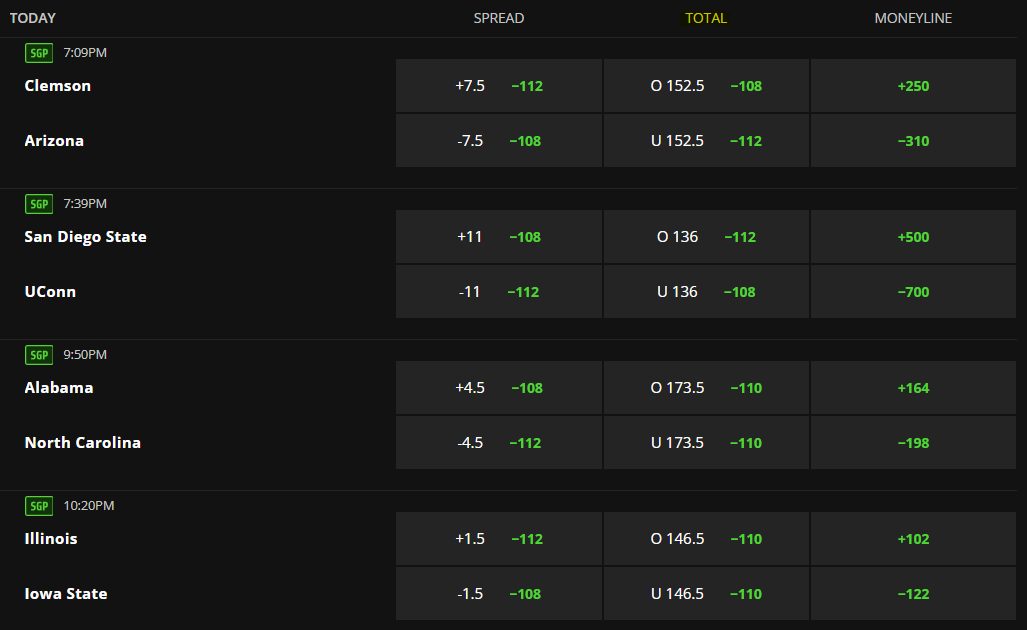
- NBA: 210 to 240 (can exceed 250 in extreme matchups)
- College Basketball: 120 to 175
Basketball totals also usually carry -110 pricing.
Like football, sportsbooks typically move the total number rather than the price when action is uneven.
Key Influences on NBA Totals:
- Pace (possessions per game)
- Offensive/defensive efficiency
- Three-point attempt rate
- Late-game fouling
- Injury reports
Because scoring is continuous and frequent, live totals move aggressively during games, especially after fast or slow first quarters.
MLB Totals
Typical Range:
- 7 to 10 runs
Baseball totals behave differently.
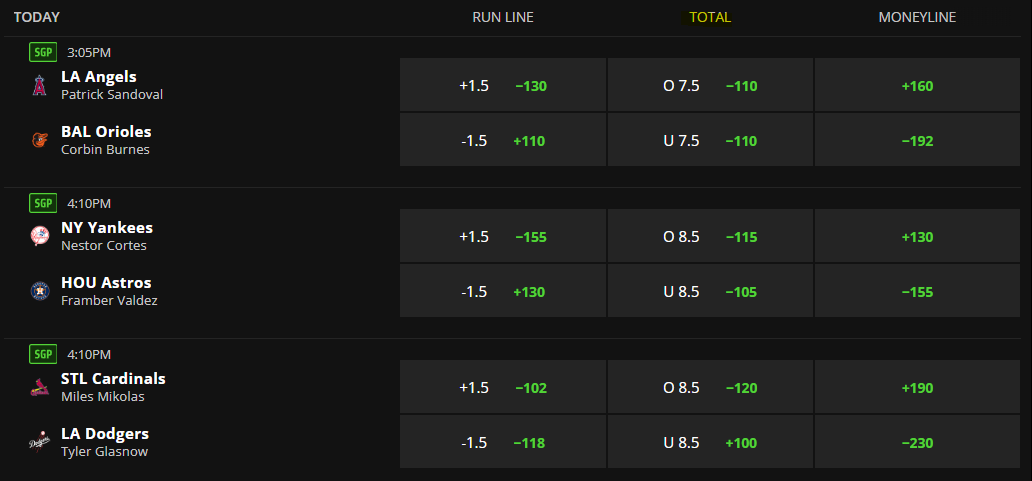
Instead of moving the total from 8.5 to 9 immediately, sportsbooks will often adjust the price first.
Example:
- Over 8.5 (-110)
- Heavy over action → Over 8.5 (-120)
- Continued action → Over 8.5 (-135)
Only after a significant imbalance will the sportsbook move the total to 9.
This pricing-first adjustment happens because scoring is lower, and each half-run represents a significant shift in probability.
What Moves MLB Totals?
- Starting pitchers
- Bullpen usage
- Wind direction
- Ballpark factors
NHL Totals
Typical Range:
- 5.5 to 7 goals
Hockey totals operate similarly to baseball.
Books often adjust the odds before adjusting the total itself.
For example: Over 5.5 (-130) before moving to 6
Because goals are relatively rare events, moving from 5.5 to 6 represents a meaningful probability change.
Soccer Totals
Soccer totals are often set at:
- 2.5
- 3
- 3.5
Stoppage time counts toward totals, but extra time and penalty shootouts usually do not (unless specifically noted).
Soccer markets frequently use quarter-lines (2.25, 2.75) in some formats, which can create partial wins or losses.
How Sportsbooks Set Over/Under Totals
Sportsbooks don’t choose totals randomly. They use statistical models, historical data, and market input to arrive at a number designed to reflect true scoring expectation – while also managing risk.
Step 1: Projection Models
Oddsmakers start with quantitative projections based on:
- Offensive and defensive efficiency
- Pace of play
- Player availability
- Weather (for outdoor sports)
- Historical matchup data
For example, if two NFL teams project to score 23 and 24 points respectively, the initial total might open around 47.
Step 2: Market Pricing
Once the number is posted, sportsbooks monitor betting action.
In NFL and NBA, books typically move the total number itself:
- 43 → 43.5
- 47.5 → 48
In MLB and NHL, books often adjust the price first:
- Over 8.5 (-110) → Over 8.5 (-125)
This difference exists because half-point moves in low-scoring sports represent a larger probability shift.
The Goal: Risk Management, Not Prediction
Sportsbooks aim to:
- Price the total efficiently
- Manage exposure
- Avoid one-sided liability
A perfectly balanced book guarantees profit through the built-in margin (the vig), but modern sportsbooks also factor in sharp money and predictive modeling – not just public betting splits.
Why Totals Are Often “Shaded” Toward the Over
The betting public tends to prefer overs. Many bettors find it more enjoyable to root for scoring than defense.
Because of this tendency, totals are sometimes slightly shaded toward the over – meaning the number may open a half-point higher than pure projections would suggest.
Historical seasons have shown that overs do not consistently hit above 50%, despite their popularity. That dynamic helps explain why sportsbooks price totals the way they do.
Implied Probability in Totals Betting
Odds are not just payouts – they reflect probability.
At -110 odds:
Implied Probability = 110 / (110 + 100)
= 52.38%
That means you must win 52.38% of -110 bets to break even.
If you believe a total has a 55% chance of going over, and the implied probability is 52.38%, that difference represents theoretical value.
Even small price differences matter:
- -110 = 52.38%
- -105 = 51.22%
Over hundreds of bets, that difference is significant.
Why Totals Move
Totals move for two main reasons:
1️⃣ Betting Action: If heavy money comes in on the over, books may:
- Raise the total (NFL/NBA)
- Increase the price (MLB/NHL)
2️⃣ New Information
- Quarterback injuries
- Weather forecasts
- Lineup announcements
- Sharp syndicate action
In football, wind can dramatically reduce projected scoring. In baseball, wind direction at Wrigley Field is a classic example of totals shifting several runs based on conditions.
Live totals move even more aggressively because every possession or scoring event changes projected outcomes.
FAQ
If a total is set at 2.5, betting the over means you’re wagering that the combined score will be 3 or more. Because the number includes a half-point (.5), there is no possibility of a push. Totals with half-points ensure a clear win or loss.
If a total is set at a whole number, for example, 45, and the final score lands exactly on 45, the result is called a push. In that case, your original stake is refunded, and no money is won or lost.
In most major U.S. sports, including NFL, NBA, NHL, and MLB regular season games, overtime or extra innings count toward the final total. However, betting rules can vary slightly by sportsbook and event, so it’s important to review the posted house rules.
Totals are not inherently easier than point spreads. Both markets are priced to reflect projected outcomes and include the sportsbook’s margin. Some bettors prefer totals because they focus on scoring rather than predicting a winner, but profitability depends on pricing and analysis, not market type.
A half-point hook refers to the .5 added to many totals, such as 47.5. The hook prevents ties (pushes) by ensuring the final result falls either above or below the number. Hooks are commonly used in football and basketball totals.
Editorial Review By: Jay Sanin, Sports Betting Analyst – This article was reviewed for accuracy to ensure betting terminology, odds examples, and grading explanations reflect commonly used sportsbook rules. Betting rules may vary slightly by sportsbook and event.
Affiliate Disclosure
ATS.io uses affiliate links. If you sign up through a link on this page, we may earn a commission at no additional cost to you. Rankings are based on hands-on testing and published criteria, and affiliate relationships do not determine placement.
More Sports Betting Topics
- Sports Betting Terms & Bet Types Meanings
- 4 Tips For Making Successful Bets
- Basketball Betting Guide – How To Bet On Basketball
- What Are First Half and Halftime Bets?
- Parlay Sports Betting
- What Is A Prop Bet? How To Make A Prop Bet
- Pleaser Sports Betting
- Teaser Betting
- Money Line Betting
- Point Spread & Betting Lines Explained
- What is Against the Spread
- What Does -110 Mean In Sports Betting? Betting Odds Explained
- What is Reduced Juice Betting?
- Bet To Risk vs Bet To Win – Wager Amount vs Risk Amount
- How To Read Rotation Numbers & Sports Betting Odds
- What Is a Progressive Parlay? How To Bet Progressive Parlays
- 3-Way Money Line
